How to make a material decision.
A practical method for choosing cloth, flowers, food, paper, glass, light, and objects by what they do—not merely by what they resemble online.
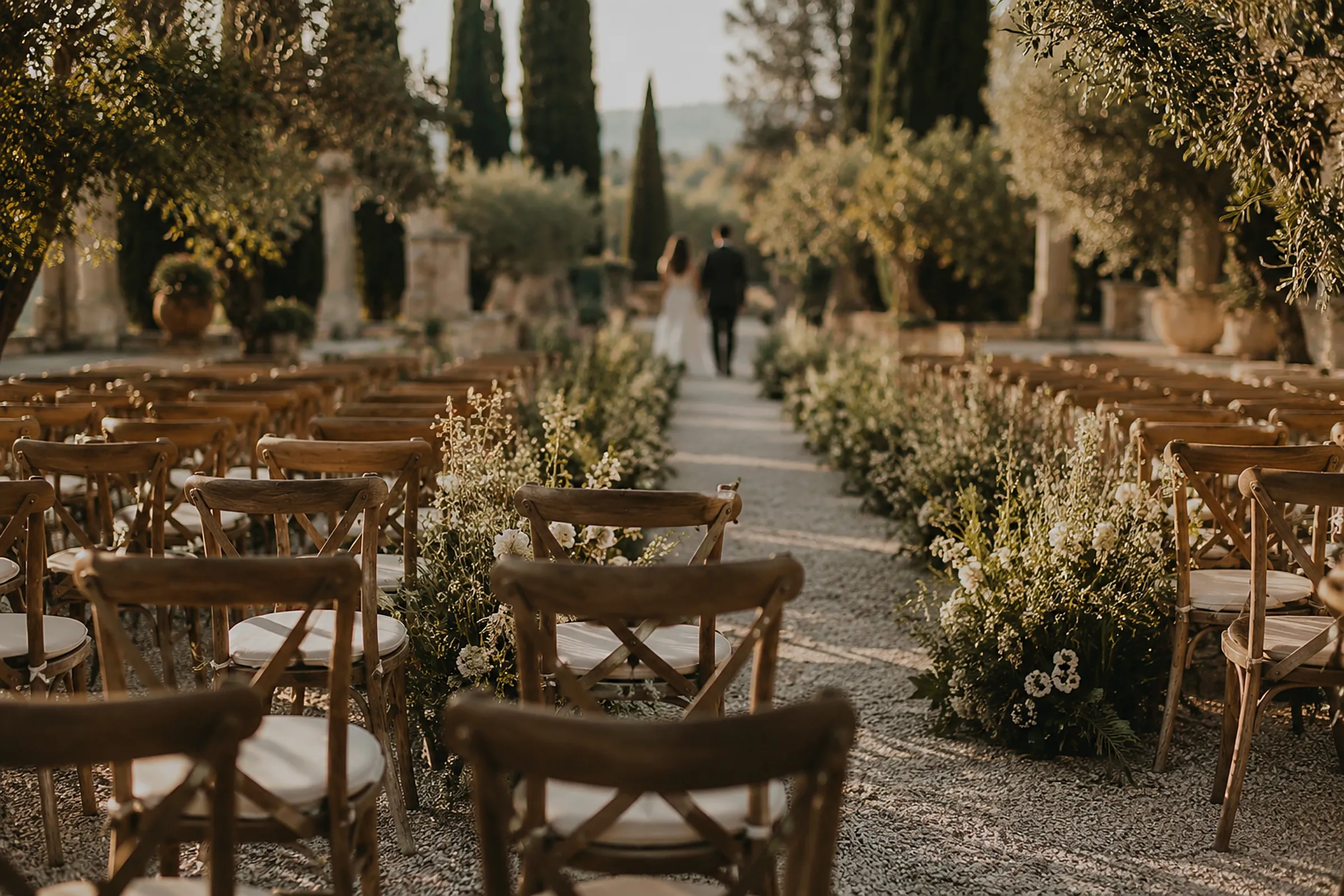
A practical method for choosing cloth, flowers, food, paper, glass, light, and objects by what they do—not merely by what they resemble online.
A material decision usually begins too late. A picture creates a feeling, the feeling creates urgency, and suddenly someone is ordering a hundred objects before answering the one question that would make the decision easier: what is this thing meant to do? The object might be a napkin, a flower, a lamp, a menu, a chair, a glass, a fabric panel, a platter, or a fruit bowl. The method is the same. Ask it to prove its job before you ask it to prove its beauty.
This does not make wedding design clinical. It makes it more expressive. When every material has a clear role, you need fewer things to say more. A rough linen can slow a polished room down. A deep blue cloth can give a limestone space a pulse. A paper edge can make a menu feel worth holding. A pear can make a table feel generous without adding another arrangement. Material intelligence is not a collection of expensive finishes. It is the ability to see how surface, scale, use, light, labour, and time work together.
1. Write the job in a single sentence.
Begin with a verb. “This cloth will soften a hard table edge.” “This flower will create a dark pause at the far end of the room.” “This menu will help a guest understand the meal in low light.” “This lamp will make faces visible after sunset.” If you cannot write a job, you are still shopping for an idea rather than choosing a material. That is not a failure; it is simply the wrong moment to purchase.
The sentence should include the actual context. A runner that looks like it will soften a table in a studio may become fussy in a room with patterned flooring. A flower that looks sculptural in a close-up may disappear against a dark wall. A paper that feels special at a desk may be impossible to read after sunset. Specific jobs produce specific tests.
2. Test close, middle, and far.
Every wedding object exists at three distances. Close is the hand: texture, weight, edge, temperature, grip. Middle is the table or conversation: how it works with plates, bodies, food, gestures, and passing service. Far is the room: silhouette, colour field, rhythm, and what remains once detail becomes tone. A choice that succeeds only in one distance needs a supporting choice somewhere else.
For cloth, run your palm across it, then drape it over the actual table, then photograph it from the entrance. For a flower, hold it at eye level, place it on the table, then step six metres back. For paper, read it at the actual hour, put it beside the plate, then ask if someone would carry it away. For light, stand under it, sit under it, then look at the room from its threshold. The tests do not need equipment. They need enough patience to see what changes when the object stops being a sample.
3. Ask what it will ask of people.
This is the labour question, and it belongs at the beginning. How many people will carry it? Does it need water, ironing, pinning, cleaning, refrigeration, assembly, a ladder, a special vehicle, a fire-safe alternative, or a person standing nearby? Can the team set it in the available loading window? Can the venue support it? What happens when it needs to be moved at 17:40 because a service route has changed?
There is no shame in a material asking for care. Some of the most affecting objects do. The problem is when the care is discovered after the choice has been made and silently passed to the most available person. A flower structure that needs two hours of delicate adjustment may be right for the day if those two hours exist. It may be wrong if the same two people are also responsible for signage, cake, ceremony chairs, and family arrival. The question is not “Is it worth it?” in the abstract. It is “Worth what, for whom, at what hour?”
4. Build a material dossier, not a moodboard.
A moodboard is good at showing an atmosphere. A dossier is good at preventing surprises. For each major material, write six lines: job; actual size; contact point; light condition; labour required; and what it replaces. The last line is important. If a blue cloth is entering, perhaps it replaces a need for ten additional candles. If textured paper is entering, perhaps it replaces the need for a complicated print treatment. If a plate already has a strong edge, perhaps the napkin can become simple. A material becomes powerful when it lets another material rest.
You can make this as a single page on a phone. The point is not the format. The point is to keep a decision attached to the conditions that gave it meaning. Months later, when a sample arrives or a budget shifts, you can see what the material was meant to carry. You are less likely to replace a useful idea with a merely louder one.
5. Use the subtraction test.
Put every proposed element into the room—or a rough version of it—and remove one. What becomes weaker? What becomes clearer? If nothing changes, the element was probably asking for attention without giving structure back. If removing it makes the room colder, flatter, harder, less legible, or less comfortable, it has a role. The test is especially useful for small luxury objects: ribbons, menu inserts, favours, extra vessels, place-setting layers, decorative food, and clustered candles. These objects can be beautiful. They also multiply quickly.
In the Hearth House scene, the addition of a deep blue silk plane allows the flower count to reduce. The silk carries colour and verticality. The flowers can become more precise. The room has not lost richness; it has gained hierarchy. This is the kind of exchange to look for. Better material decisions often mean fewer individual pieces and more responsibility for the ones that remain.
6. Rehearse the change of state.
Every room changes from daylight to evening, empty to full, ceremony to dinner, clean to used, formal to joyful. Choose materials that can make the transition with dignity. Test a menu under artificial light. See whether the cloth looks dull once the sun goes. Ask what the flowers will do after several hours without a fresh cut. Consider where glassware, coats, bags, and a child’s crayons will land. A wedding is not a photograph held at its best second. It is a sequence of changing conditions.
This rehearsal can be small. It may be a table test at 4pm and 8pm. It may be one sample arrangement placed against a wall. It may be a walk through the venue with a torch or a phone light. The point is to find the materials that gain character over the course of the day, or at least do not collapse when the day stops being controlled.
7. Decide what will be remembered physically.
The final question is not “Will this photograph well?” It is “What will this leave behind?” A paper menu may leave a folded keepsake. A cloth may leave the memory of a hand resting on something soft. A flower may leave a scent on a coat. A long table may leave the memory of leaning toward someone because the proportions made conversation easy. Memory is not always visual. Often it is a felt permission: there was room for my glass, my plate, my body, my attention.
Use this framework as many times as you need. It will not deliver a universal answer, and it should not. It will give you a way to notice when a choice belongs to the place, the hour, and the people who will make it happen. That is enough. A wedding gains depth not through more material, but through material that understands its responsibility.
Field guide: Use the framework with your actual venue, team, budget, and constraints. It is a tool for clarity, not a style rule.
Filed under
This story is part of the permanent collection of Aura Stories — yours to return to, always.
The Issue
The Issue. Twelve weddings a year, in your inbox.
One dispatch a month — the weddings, the makers, the taste behind them. No spam, leave whenever you like.
The conversation
Comments
No comments yet. Be the first to write one.
Sign in to comment