The ninety-minute window.
The final hour and a half asks a room to become itself. Light, architecture, service, sound, and people need a plan with enough discipline to receive surprise.
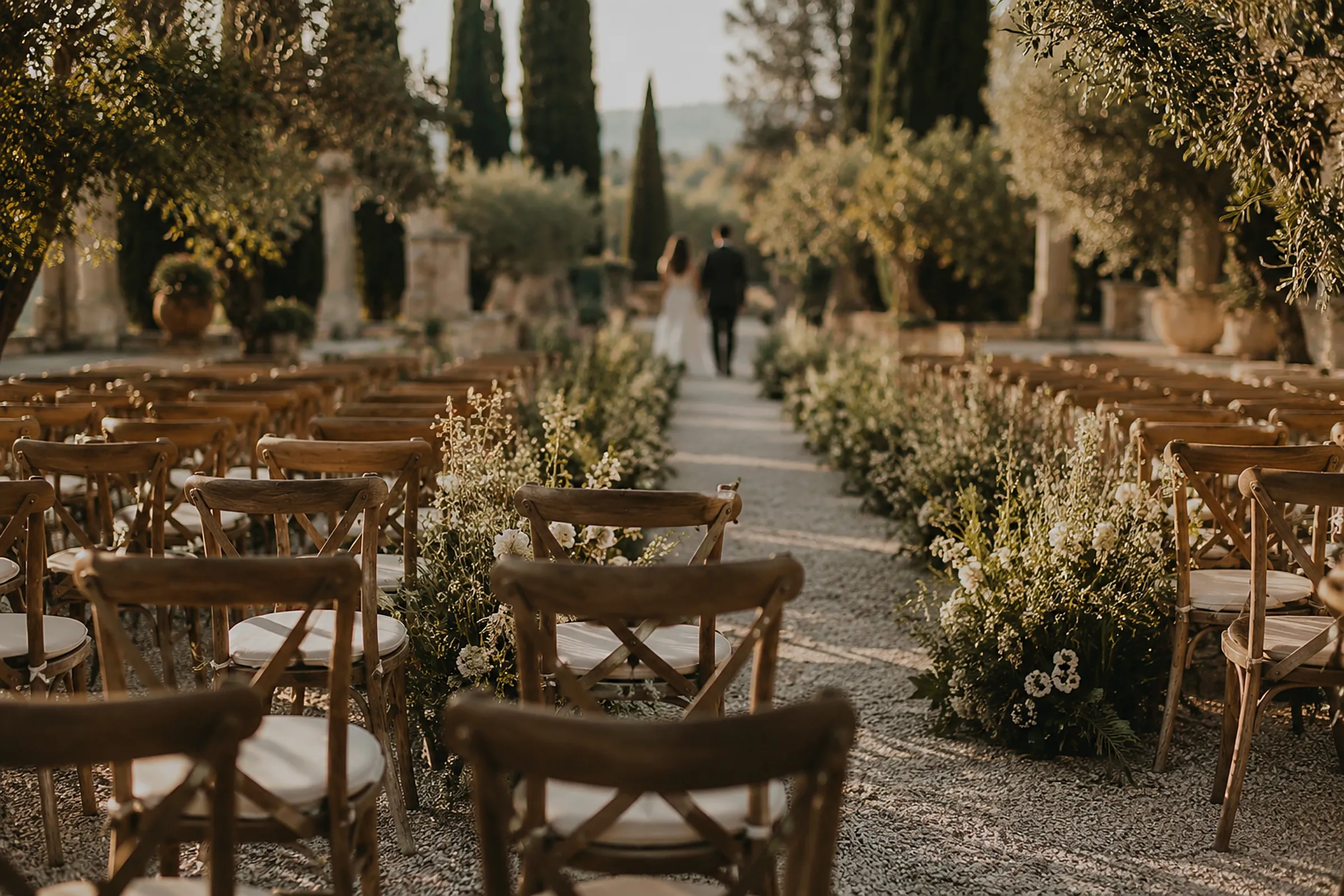
The final hour and a half asks a room to become itself. Light, architecture, service, sound, and people need a plan with enough discipline to receive surprise.
The last ninety minutes before guests enter a wedding are often where taste gets mistaken for stamina. The room looks close enough, someone sees an opportunity for one more detail, a delivery arrives earlier than expected, a family member asks whether the signs can move, and suddenly the remaining time becomes a place where every unfinished decision tries to live. It is tempting to call this normal. It is more useful to call it what it is: a design condition. Time has a texture. It can be thin, crowded, protected, or wasteful. A room feels calm when the people who made it were given enough of the right kind.
In the Hearth House fiction, the ninety-minute window begins at 16:40. The tables are placed but not finished. The flowers have found their direction but not their final height. The sound system has passed its first test but one cable still needs to cross a service route. The sun is about to turn a beautiful window into a lighting problem. The doors will open at 18:10. There are not ninety minutes for everything. There are ninety minutes for the things that can still make the room safer, more coherent, and easier to inhabit.
Minus ninety: make the room walkable.
Before anything becomes beautiful, make it possible to move. Walk the path from delivery door to kitchen, from ceremony entrance to the nearest bathroom, from every seat to a clear exit. Sit at a few tables. Pull out a chair. Hold a glass. Ask where a server will pass and where a photographer will need to stand without blocking a guest. This is architecture at the human scale. A drawing can show distance; only a body can show whether that distance has become comfortable.
The temptation is to wait until the styling is complete, then solve circulation around it. Do the reverse. Decide the service and guest paths early, then protect them from becoming storage. A coat rack does not belong in the only easy turn. A vendor case does not belong behind the sweetheart table because it is briefly convenient. A floral crate that stays five minutes too long can become the first thing guests notice on arrival. In the last ninety minutes, clear space is not empty. It is an active part of hospitality.
Minus seventy: test the real light.
Light is one of the few materials that changes itself while you are working with it. The room at noon is not the room at six. A grey wall can become warm. A pale menu can flare. A flower that reads as sculptural in shade can become a dark hole in a backlit corner. Do not solve this with a photograph from a different hour. Stand in the actual room and look from the actual guest positions.
At Hearth House, the late sun cuts a bright line through the table. The first reaction is to erase it. That is understandable and usually expensive: more fabric, more candles, more reflective objects, more last-minute arrangements that have not been tested. Instead, the team asks a calmer question. What can the light do well? They move the pale flowers through it, shift the darkest flowers out of it, and let the room have a gradient from afternoon to early evening. The light stops being a defect because the design begins to speak with it rather than over it.
A practical test is simple. Put one plate, one glass, one piece of paper, and one flower where they will actually sit. Take a photograph at the hour guests will enter, but also look with your own eyes. The camera catches glare; the eye catches whether a person’s face will be in shadow, whether the table feels cold, whether the colour of a napkin has disappeared. Adjust the source if you can. If you cannot, adjust the objects that are being asked to survive it.
Minus fifty: close the decisions that need closing.
This is the time to make a short list of what is no longer open for debate. The seating plan. The table count. The music order. The food portions. The ceremony order. The question is not whether an emergency can happen; it can. The question is whether every passing idea will be treated like an emergency. A protected plan gives people permission to say, “We are not changing that now.” It is one of the kindest sentences in production.
Closing a decision does not mean becoming inflexible. It means distinguishing an actual need from aesthetic anxiety. Six unexpected elders staying for dinner is a need; it deserves a real answer. Moving every candle because one photograph looks too symmetrical is an anxiety; it can wait, or it can be released. A useful rule is to ask whether the change affects comfort, access, safety, service, or the couple’s ability to be present. If it does, it has a claim on the final hour. If it changes only a single image, it may not.
Minus thirty: change from making to protecting.
At this point, objects should no longer be entering the room without a reason. The styling team finishes its final pass. The catering team confirms how the first course will land. The sound team secures cables. The planner checks that the couple have water, a quiet place, and enough time to breathe before being asked to perform happiness. The photography team gets a clean room for the few minutes it needs, then gives the room back to the people who will use it.
Protection is a less glamorous word than styling, but it is where many good weddings are won. It means not allowing well-intended helpers to put bags under the main table. It means keeping a staff meal or water break from becoming a logistical emergency. It means telling the family, kindly, which door to use so the arrival does not collide with the final setup. It means having a small kit—tape, pins, scissors, cloth, a pen, a spare menu, a stain solution—so that small problems stay small. None of this creates a photograph. It creates the conditions in which a photograph can be honest.
Minus ten: remove witnesses to the work.
The final visual pass is not about making the room look empty. It is about letting the room stop explaining itself. The cases leave. The ladders leave. The flower buckets leave. The tape that can be removed is removed; the tape that cannot is made discreet. The people who have been looking at every centimetre step back. This is the moment when the room must be trusted to carry its own decisions.
A good final pass looks for friction, not ornament. Is there a chair that catches on the wall? Is the paper readable? Does a napkin fall into a plate? Is one cable visible from the entrance? Are the candles or lamps being asked to do more than they can do? Is there a place for a guest to put a bag, a glass, an elbow? A room becomes welcoming through these small permissions. They are harder to notice than a flower installation and more likely to shape how the night feels.
When the doors open.
The work does not stop. It changes state. A planner begins watching flow. A server begins watching pace. A florist may return to check water or remove a damaged stem. The lighting person reads the room differently once bodies fill it. But the most demanding assembly should be over. The team should be free to respond, not still building the premise of the evening while people walk through it.
The purpose of the ninety-minute window is not perfection. Perfection is a brittle goal, especially in a room full of moving people. The purpose is readiness. It is to make enough clear decisions in advance that a surprise can be met with care rather than panic. It is to let light change, flowers lean, families expand, and dinner run late without making anybody feel that the day has broken. Time, handled well, becomes the invisible material holding all the visible ones together.
Operational note: This is a fictional time study, not a universal run-of-show. Adapt it to the actual site and team.
Filed under
This story is part of the permanent collection of Aura Stories — yours to return to, always.
The Issue
The Issue. Twelve weddings a year, in your inbox.
One dispatch a month — the weddings, the makers, the taste behind them. No spam, leave whenever you like.
The conversation
Comments
No comments yet. Be the first to write one.
Sign in to comment