After the guests.
When the room is cleared, the work returns to objects. What remains is not proof of perfection. It is evidence that people were held.
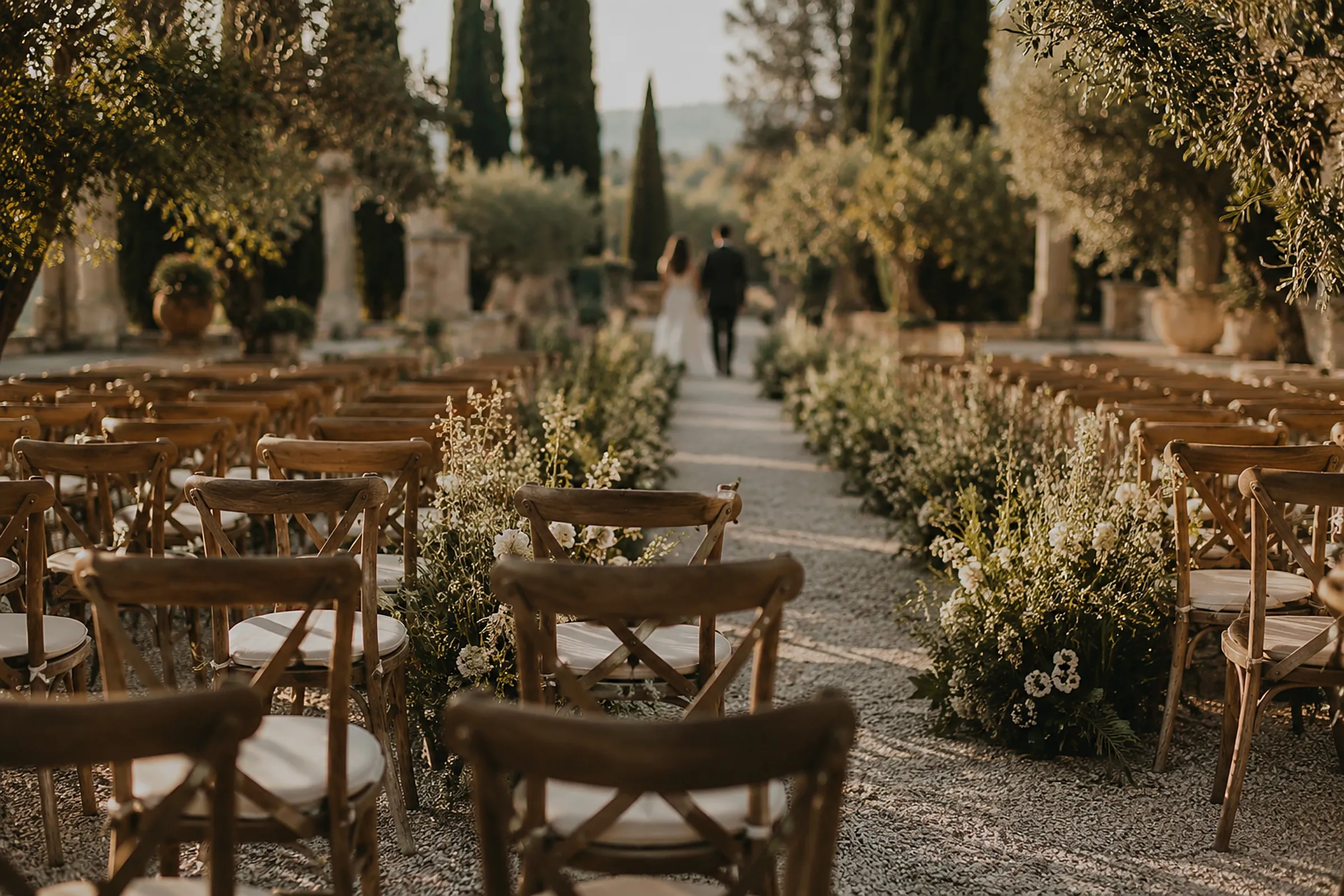
When the room is cleared, the work returns to objects. What remains is not proof of perfection. It is evidence that people were held.
At 00:43, the fictional limestone room has changed its register. The music is off. The black doorway is simply a doorway again. One end of the blue silk has loosened from its linen tie, not enough to fall, only enough to remember that it is fabric. There are two pears left in a bowl, their skins bruised where guests have picked them up and changed their minds. A menu has been tucked under a plate. A chair is angled toward the wall with the exhausted frankness of a chair that has hosted too many stories in one evening.
The team moves through the room differently now. During setup, every object had a future. The glassware would catch light. The napkins would invite a hand. The flowers would establish their little line of attention across the table. Now the objects have histories. There is lipstick on one glass. A spilled drop of wine has made an honest dark bloom in the graphite linen. The paper, which looked very composed at six o’clock, is folded and soft at the edges. The room is less perfect and more complete.
This is the emotional consequence of the work: you do not get to keep it. A person can spend months finding the right cloth, days testing the way a flower will look against stone, hours moving plates by fractions, and then give the whole arrangement away to a few hours of appetite, conversation, weather, music, tears, appetite again. This is not waste. It is the form. A wedding is designed for use, and use leaves its marks.
There is a temptation, after a beautiful day, to treat the evidence of use as a problem to be erased. The dropped napkin, the smudged card, the dent in a soft pear: all can look like an interruption to the image. But a wedding that remains pristine has not fully made contact with the people it invited. The work of design is not to prevent life from touching the room. It is to make a room sturdy enough that touch becomes part of the meaning rather than a threat to it.
What remains is often very small.
A caterer remembers which loaf had to be cut twice. A florist remembers the stem that would not face forward. A planner remembers the six extra seats and the moment the table finally held them. A mother remembers that the sleeve was fine after all. The couple may remember none of these details in sequence. They may remember instead that the room became quiet just before dinner, or that an aunt laughed hard enough to put a hand on the table, or that somebody brought them a plate of food when they had forgotten to eat.
That is not a gap in the record. It is the point of the record. Good care becomes background so that people can move through the foreground of their own lives. There is no need to insist that every hidden act be seen in order for it to matter. But there is a need to build days that do not consume people invisibly in the name of making someone else’s memory. The evidence of care should be in the experience, not in someone’s exhaustion afterward.
So the final work is striking the room with the same attention that made it. Flowers are taken apart and given water or carried out. Glass is counted. Linen is folded with the spill still in it, because tomorrow somebody can decide what to do with the evidence. Paper is gathered. Tape comes up where it can. The blue silk is untied, slowly, because it was held by a knot that mattered only for a few hours and did its job perfectly. Nothing has failed because it is ending.
The rooms that stay with us are not the ones that looked untouched. They are the ones that made it easier to touch the people we came for. The physical decisions—the cloth, the flower, the paper, the food, the light, the doorway—were all in service of that contact. They made a place where people could arrive as themselves and leave carrying some part of one another.
In the morning, a single menu may surface in a pocket. A photograph may show the pear bowl exactly as the team hoped it would look. A text may arrive that says only, “I felt so looked after.” It is a small sentence. It is also the reason for every knot, every fold, every careful decision made before the doors opened. The room is gone. The care has changed form.
Last page: All scenes and characters in this issue are fictional. The responsibility of care is not.
Filed under
This story is part of the permanent collection of Aura Stories — yours to return to, always.
The Issue
The Issue. Twelve weddings a year, in your inbox.
One dispatch a month — the weddings, the makers, the taste behind them. No spam, leave whenever you like.
The conversation
Comments
No comments yet. Be the first to write one.
Sign in to comment