Naina & Arjun: A Ceremony with Weather
One afternoon in the Nilgiris, a wedding let the clouds finish the sentence.
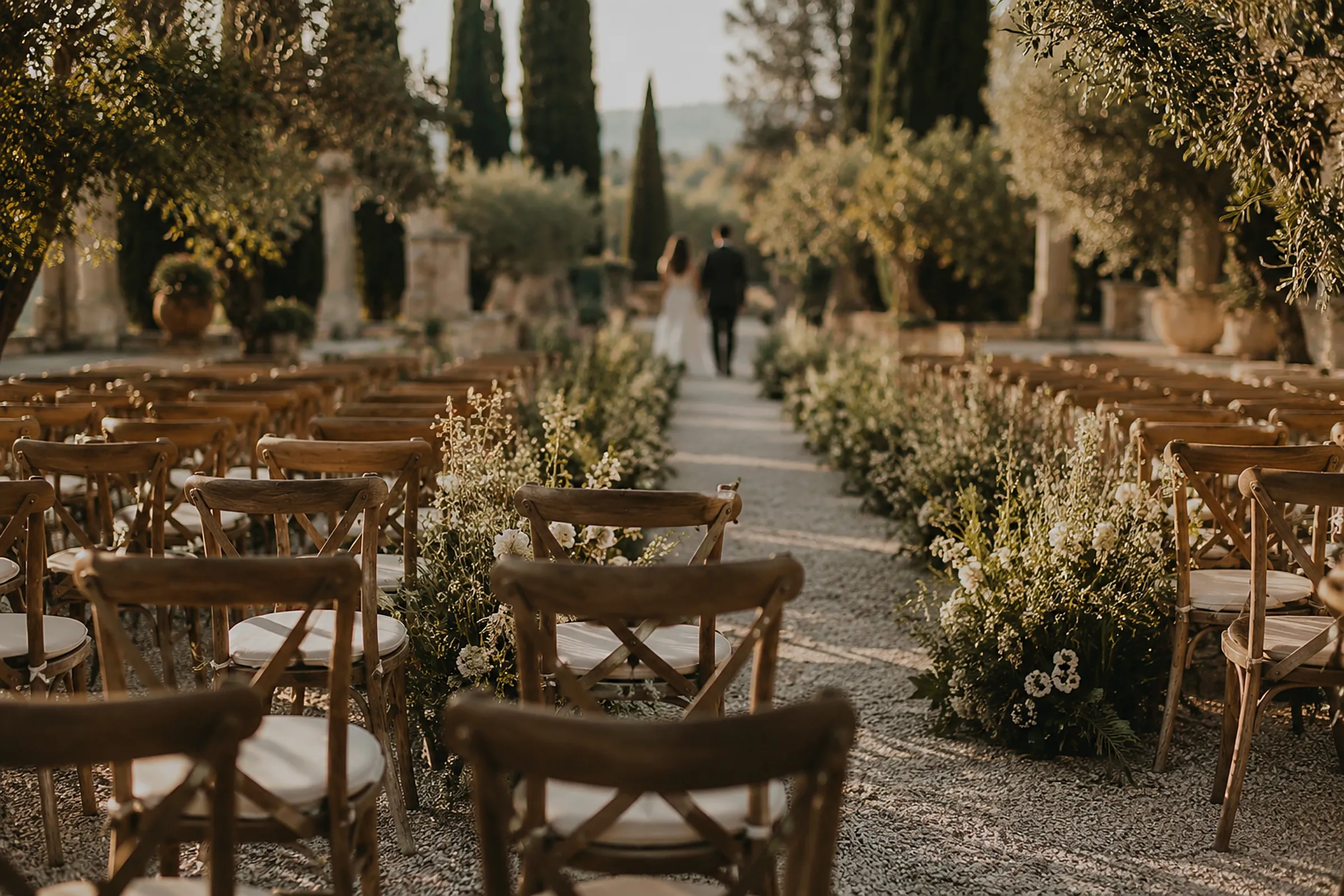
One afternoon in the Nilgiris, a wedding let the clouds finish the sentence.
They chose a hill station in July because they loved the way rain makes a landscape intimate: the hills move closer, the rooms become warmer, and every arrival has a story.
The forecast had been a soft threat all week. On the morning of the ceremony, it appeared as a row of grey droplets on every phone in the house, and then as the smell of wet cedar arriving through the kitchen window. By midday, nobody was asking anyone to look at it. The valley beyond the old estate had disappeared into one long band of silver; the veranda—open to the hills on three sides—had become its own small climate.
The first guests came up the stone path with their umbrellas folded under their arms, as though carrying dark flowers. Their hems were damp. A child used the terrace drain as a game. An aunt stood at the edge of the canopy, deciding whether the rain was light enough to be ignored. It was. Soon the umbrellas leaned together in a brass stand, and the room began to sound different: rain on the garden, rain on the old roof tiles, a lowness in everyone’s voice.
Nothing was moved indoors. This had not been a gamble; it had been a decision made much earlier, when the day was still imagined in diagrams and swatches. The flowers were allowed to drink. Brass lamps grew brighter against the wet stone. The open sides of the veranda were left open, because the view mattered more than an illusion of certainty.
The design was precise in the way the best design is precise: only things with a reason. Creams that could hold dusk without turning cold. Tuberose kept low enough that a guest could find its fragrance only when leaning toward a friend. No flowers taller than a seated conversation. The ceremony canopy was lined, not sealed, so that it softened the rain instead of pretending it was elsewhere.
There is a small moment in every wedding when the work passes from the people who planned it to the people who have arrived. Here, it came when the rain became too steady to overlook. A server began placing extra linen napkins over chair backs. Someone lit two more lamps. The person at the sound table covered one cable with a folded tablecloth. No announcement was made. The gathering simply adjusted itself, and in doing so became more attentive.
The ceremony began a little later than expected. Nobody could have said how much later. The priest’s voice moved easily under the canopy; the rain took the pauses between phrases and made them feel deliberate. Naina’s ivory sleeve darkened at the cuff. Arjun’s shoes left a faint wet print near the steps. These were not the details anyone had circled in advance, but they were the details that made the afternoon feel inhabited rather than staged.
That distinction mattered. The day was not made beautiful by its inconvenience. It was made beautiful because every element had a second life. The canopy became a room. The slick terrace became a mirror. The rain, instead of reading as a problem to overcome, gave the gathering a shared direction of attention.
At dinner, the clouds lifted just enough to return the hills. No one applauded. It would have been too much. The mountains simply reappeared, one grey-blue contour at a time, while water dripped from the edge of the canopy into the garden beds. Plates arrived warm. Conversation grew louder. By the time the last lamps were burning, the weather had ceased to be the story. It had become part of the memory’s texture: the thing that held the whole evening together.
A wedding does not need a perfect weather day. It needs a visual language sturdy enough to become more beautiful inside the weather. From the cover story
The day was designed in layers: enough softness for a clouded sky, enough light for the last thing the rain would leave behind—and enough calm that a wet hem could become part of the picture.
What held it
Not a perfect forecast, but a set of decisions that each became more specific once the weather arrived.
- Ivory and wet leaf
- Brass after dusk
- One long table, unhurried
Editorial disclosure: Original editorial fiction; people, place, and wedding details are illustrative.
Filed under
This story is part of the permanent collection of Aura Stories — yours to return to, always.
The Issue
The Issue. Twelve weddings a year, in your inbox.
One dispatch a month — the weddings, the makers, the taste behind them. No spam, leave whenever you like.
The conversation
Comments
No comments yet. Be the first to write one.
Sign in to comment